Dark nasal discharge after a construction site: what to do?
Partager
Dark nasal secretions after a construction site: what to do?

When you get back from the construction site, you take a shower, blow your nose... and the tissue comes out brown or almost black. Your nasal secretions are thick, dark, sometimes grainy. It's not very glamorous, but it's very common in construction, renovation, sanding, concrete work, or any very dusty work.
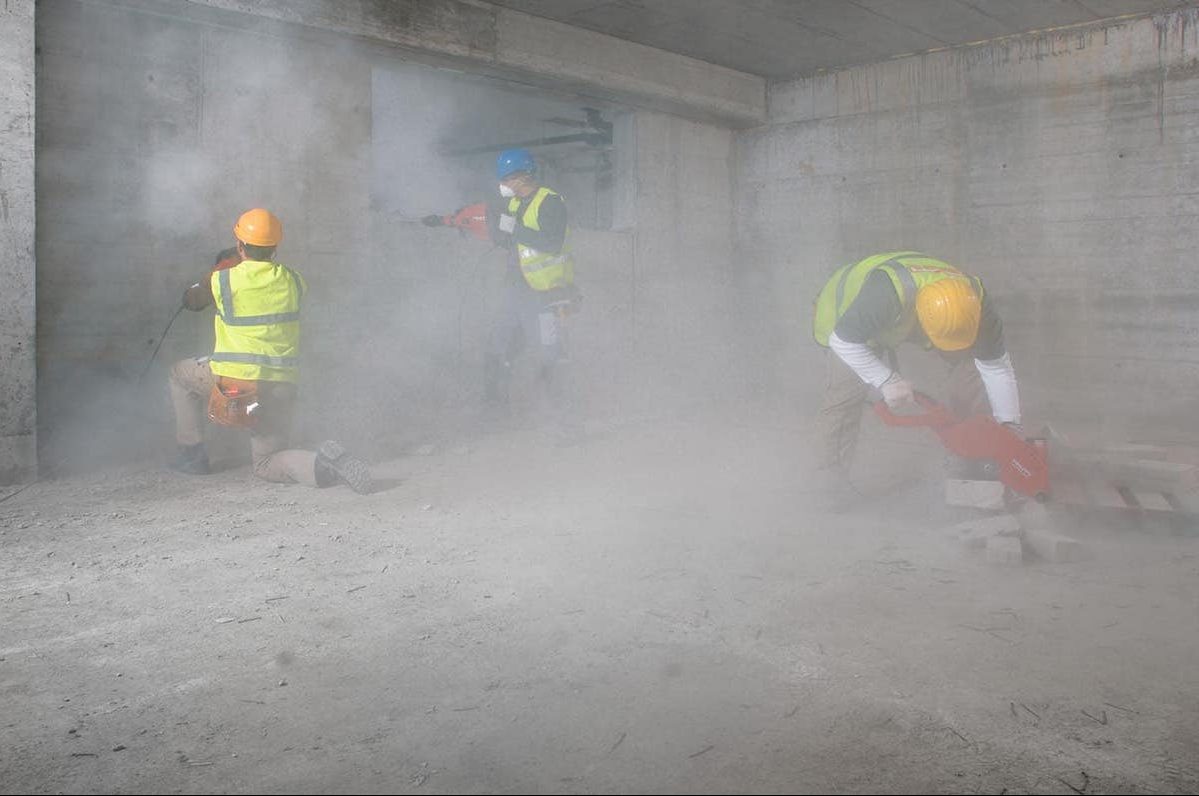
Good news: in many cases, it's primarily a sign that your nose has done its job as a filter. But in the long run, repeated exposure to construction dust is not harmless to your respiratory health.
Dark nasal secretions after a construction site? Be careful
Dark nasal secretions after a construction site mean that you have breathed in air heavily laden with particles. These can be cement, plaster, wood, or silica dust, but also fumes and other pollutants.
Nasal mucus retains these particles, thickens, darkens, and then you expel all of it by blowing your nose or in the shower. What you see in the tissue is a part of the construction site you breathed in during the day.
The role of your nasal secretions
Your nasal secretions and the lining of your nose form your primary defense system. They humidify the air, trap dust, pollen, and particles, then transport them to the front of the nose or down the throat.
On a very dusty construction site, this system is over-stressed. Secretions become thicker, more abundant, and take on a dark gray, brown, or almost black color. This is a normal protective mechanism, but if it happens every day, it indicates that your respiratory tract is highly exposed.
When is it "normal" and when should you worry?
Certain situations are logical given what you did during the day. After intensive sanding, cutting materials, demolition, or working in a poorly ventilated area, seeing dark nasal secretions in the evening is common. If the color returns to normal after one or two days without exposure and you have no other symptoms, your body has probably managed the episode well.
However, you should be more vigilant when nasal secretions remain dark even when you're not at work, when you often notice blood in the mucus unrelated to simple scratching, when you feel pain in your nose, forehead, or sinuses, or when you have a fever and headaches. A persistent cough, unusual shortness of breath, wheezing, or a feeling of chest tightness should also prompt you to consult a doctor.

This article gives you some guidance, but only a doctor or occupational health professional can accurately assess your situation.
What you're really breathing on a construction site
On a construction site, "dust" isn't just a bit of airborne dirt. It can contain mineral dust from cement, concrete, brick, or plaster, crystalline silica, wood dust, as well as fine particles like PM2.5 or PM10.

Some of these particles irritate mucous membranes and respiratory tracts. Others, in the long term, can promote chronic respiratory diseases or increase certain risks such as asthma, chronic bronchitis, COPD, or certain respiratory tract cancers, depending on the nature of the dust.
Your dark nasal secretions are a concrete indicator of this exposure. They show what your nose has retained, but some particles go further, into the bronchi and lungs.
Reducing exposure to construction dust
The goal isn't to dream of perfectly clear secretions when you work in construction, but to minimize the amount of dust that reaches your nose and lungs.
The first reflex is to limit dust at the source. Using tools with integrated vacuum systems, connecting to suitable dust extraction systems, misting or lightly watering materials during cutting or chiseling, as well as regular cleaning of the work area, all help reduce airborne dust. Avoiding compressed air blowing is also important, as it just puts dust back into the air instead of removing it.
Site organization also matters. Where possible, it's better to isolate very dusty areas, limit the number of people present in these areas, plan breaks in a better-ventilated place, and avoid staying for long periods in confined spaces without air renewal. Small adjustments can make a real difference at the end of the day.
Adopt a real "after-work" routine
Your post-work routine can help your body recover. A complete shower, including hair and beard, helps remove a good part of the particles that have remained on your skin and in your hair. Separating work clothes from everyday clothes also limits the dust you bring home.
You can also discuss with your doctor or pharmacist the benefit of nasal rinses with saline solution. They are often used to help clear secretions and soothe mucous membranes after heavy exposure.
Protect your respiratory tract with a suitable mask
Even with good practices on the construction site, there are still situations where dust cannot be sufficiently reduced. In this case, wearing appropriate respiratory protection becomes essential.
The most important thing is to choose a truly ergonomic mask, capable of filtering fine particles, that fits well to the face and remains bearable for several hours. A poorly fitted mask lets air pass through the sides and loses much of its effectiveness. An uncomfortable mask often ends up... in your pocket.
If you regularly work in dusty environments, you can, for example, use an ergonomic respiratory protection mask designed to filter fine particles like PM2.5. On Manuzen, you will find this model designed for this type of use:
Ergonomic PM2.5 respiratory protection mask


This mask is ergonomic to fit the face, comfortable for long wear, breathable thanks to an exhalation valve that helps expel heat and humidity, and reusable with replaceable filters. It is suitable for regular construction sites, DIY, or very dusty gardening.
Key takeaways
Dark nasal secretions after a construction site are not just a disgusting detail. They are a visible signal of what you have inhaled during the day.
If this happens occasionally during very dusty construction work, it's already a reminder to reinforce your protection. If it becomes habitual or is accompanied by other symptoms such as a persistent cough, shortness of breath, pain, or the presence of blood, it's a serious signal to address with a healthcare professional.
Your respiratory health is not a consumable for the construction site. You can change tools or shoes, but you only have one pair of lungs.