What safety boots should I choose for working in the rain?
Choosing safety boots for working in the rain isn't just about finding a pair advertised as waterproof. On an outdoor construction site, in a waterlogged garden, or during an intervention around a building, water combines with mud, slippery ground, impacts, and sometimes the risk of perforation. Suitable footwear must therefore meet the actual work requirements, remain comfortable for the intended duration, and bear the markings required for your activity.
This guide helps you check five concrete points: exposure, waterproofing and comfort, foot protection, grip and fit, and maintenance. The objective is to choose without confusing an advertised feature on a product sheet with an independent certification.
1. Identify job risks and exposure duration

Start by observing the terrain before comparing models. Light rain on a smooth slab does not create the same constraints as a day in the mud, a wet trench, or frequent movement between the outdoors and a workshop. Note the duration of exposure, the presence of puddles, changes in level, heavy objects being handled, and elements likely to pierce a sole.
This diagnosis avoids two common mistakes: choosing solely based on appearance and assuming that a "sturdy" shoe suits all trades. Obligations can vary depending on the job, employer, and risk assessment. Before purchasing, check the visible marking, documentation, and classification required in your context. A commercial description, however detailed, does not replace this check.
For a short intervention in a downpour, the priority will often be grip and water resistance. For a full day, you need to add support, weight, toe room, and internal moisture management. On uneven ground, a properly fitting upper also reduces unwanted movement, provided it doesn't compress the ankle.
2. Check waterproofing and comfort throughout the day

A design advertised as waterproof protects against water coming from outside, but comfort also depends on the cut, socks, and activity. Check the junction between the sole and the upper, the closure areas, and the actual height covered. Water can enter from the top during deep immersion, even if the material resists rain.
Try on the boots with the socks you wear at work. Your toes should be able to move without your heel slipping excessively. Walk, step up a stair, and bend your knees: a hard spot felt in a few minutes is likely to become painful after several hours. Do not compensate for a poor fit with two pairs of thick socks, which can compress the foot and retain moisture.
The product sheet for TEXIWAS waterproof safety boots notably advertises a waterproof design and rotating lace closure. This adjustment can facilitate uniform tightening, but it is still essential to choose the right size and ensure that the system supports the foot without creating pressure.
3. Choose foot protection suited to the worksite

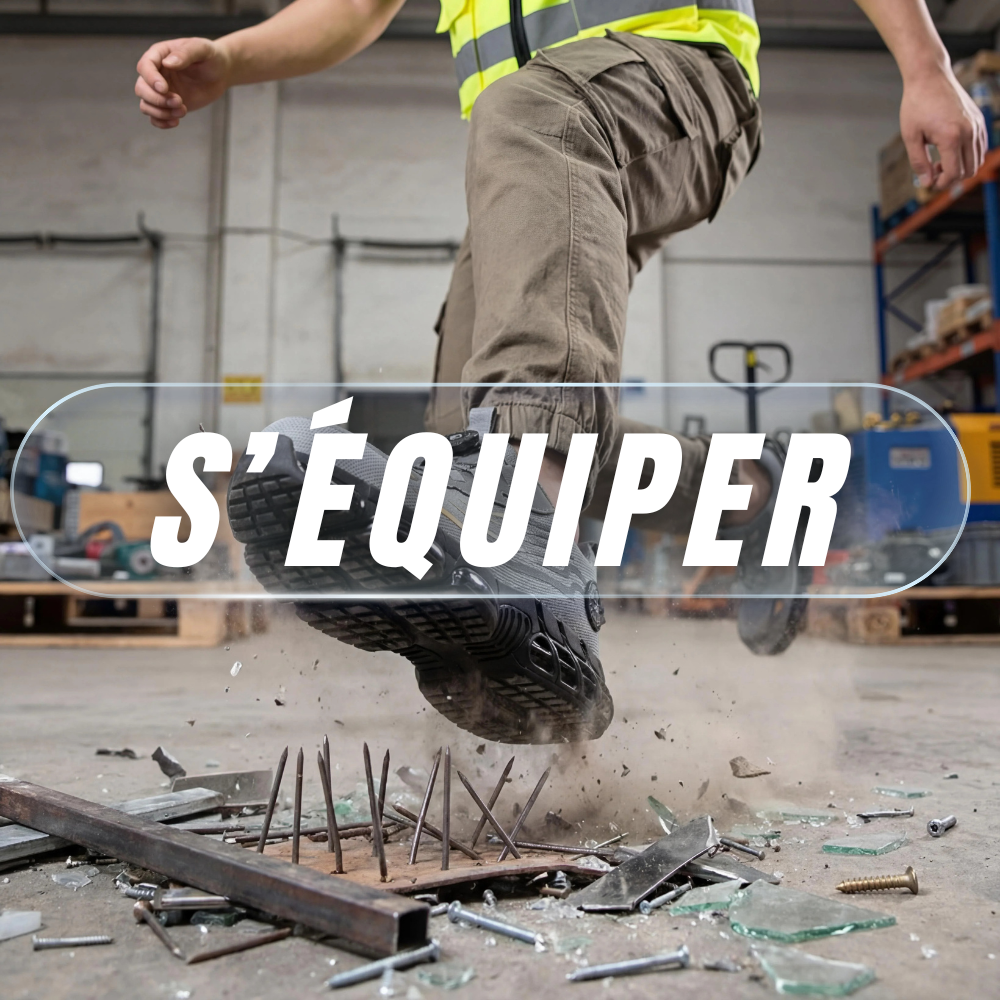
Rain does not eliminate mechanical risks. If you are moving materials, the front of your foot may be exposed to impacts. If the ground has screws, nails, or debris, puncture protection becomes a distinct criterion. TEXIWAS advertises a steel toe cap and a Kevlar anti-perforation sole; the alternative 9K-JB SPORT also advertises a steel toe cap and a Kevlar midsole.
This information serves to pre-select a product, not to automatically conclude that it complies with your position. Request or consult the marking of the received pair, its instructions, and the requirements of your activity. A toe cap protects a defined area, but it does not make the foot invulnerable. Similarly, a layer advertised as anti-perforation never justifies intentionally stepping on a sharp object.
Also adopt good handling methods: reasonable load, clear path, two-handed grip, and clear visibility of the ground. Footwear complements these precautions; it does not replace site organization or other required equipment.
4. Verify grip, fit, and variations

On wet ground, the sole must remain clean and offer suitable tread. The TEXIWAS product sheet advertises an anti-slip sole, but grip always depends on the surface, wear, and contaminants. Oil, clay, or wet sawdust can significantly reduce grip. Test your footing gradually, bypass dubious areas, and clean the lugs when they are saturated.
The correct fit is just as important. A foot that slips inside disturbs stability, while excessive tightening hinders comfort. Try on each shoe, as both feet are not always identical. Also check that the chosen size remains suitable with your work socks and that your heel doesn't lift with each step.
Variations are not just about color. They primarily allow you to select an available and consistent size. Consult the active options on each product sheet before ordering: availability and price may change.
5. Maintain your boots and decide between two profiles

After a wet day, remove mud with a soft brush, wipe the upper according to the manufacturer's instructions, and air dry in a ventilated area. Avoid direct heat, which can damage certain materials and adhesives. If possible, remove the insole to speed up drying, then check the closure, seams, sole junction, and the condition of the treads.
Replace a pair if water penetrates, if the sole detaches, if the tread is very worn, or if a protective element appears damaged. Do not haphazardly repair a structural area: a correct appearance does not guarantee the maintenance of the protective function.
| Main Need | Relevant Manuzen Product | Advertised Features | To Check |
|---|---|---|---|
| Rain, quick adjustment, and wet footing | TEXIWAS | Waterproof, steel toe cap, Kevlar layer, rotating laces, anti-slip sole | Size, marking, instructions, and job requirements |
| High-top alternative for wet construction sites | 9K-JB SPORT | Waterproof, steel toe cap, Kevlar layer, leather and breathable mesh | Fit, marking, availability, and maintenance |
In conclusion, the right safety boots for working in the rain are those that simultaneously match the terrain, mechanical risks, and duration of use. Compare the advertised features, then validate the size, marking, and condition of the pair. To broaden your choice, consult the Manuzen collection of high-top safety boots and shoes.