Safety shoes that are too tight or that come undone: a real problem at work
Safety Shoes Too Tight or Coming Undone: A More Common Problem Than You Think

Safety shoes too tight in the morning, too loose in the afternoon.
Laces that come undone, never tighten properly, or drag while working.
For many professionals, these are situations experienced every day.
These inconveniences may seem minor, but when repeated over weeks or months, they directly impact comfort, concentration, and sometimes even workplace safety.
Why do safety shoes become too tight or come undone?
The foot is not static throughout the day. It swells slightly with heat, effort, prolonged standing, or repeated walking.
Conventional laced safety shoes are not designed to automatically adapt to these variations.
Result:
- correct tightening initially, then too tight after a few hours
- a need to loosen then re-tighten several times
- laces that come undone with movement
- uneven pressure distribution on the top of the foot
In the long run, this creates discomfort, pressure points, and an increased sense of fatigue.
The consequences for comfort and concentration
When safety shoes are too tight or constantly come undone, the brain remains focused on an unnecessary detail: the feet.
This leads to:
- constant micro-interruptions
- cumulative time loss throughout the day
- a decrease in concentration
- a subtle but constant stress
In physical, industrial, or craft professions, comfort is not a luxury; it is a factor in performance and safety.
Traditional laces: an outdated solution?
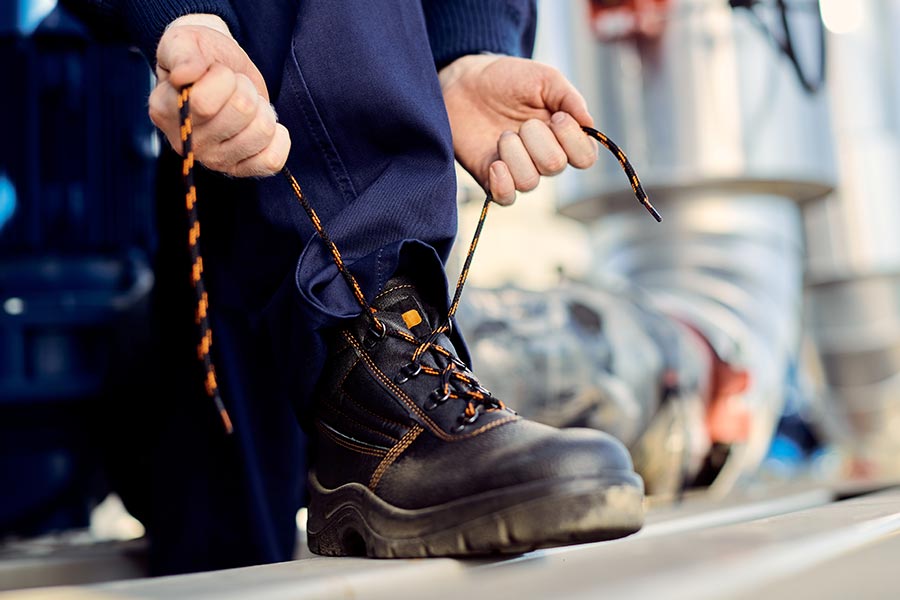
Laces have long been the norm, but they have several limitations in a professional environment:
- non-uniform tightening
- risk of loosening
- slow adjustment
- rapid wear
In certain conditions (construction sites, workshops, outdoors, humidity), they even become an additional constraint.
It is to address these issues that laceless safety shoes or those equipped with quick-lacing systems have emerged.
Laceless safety shoes: a smarter alternative
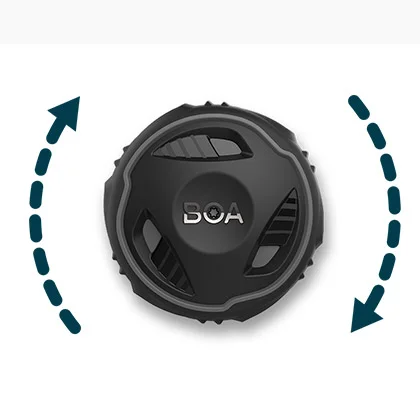
Laceless safety shoes or those with quick-lacing systems (like BOA®) allow for precise and even adjustment across the entire foot.
The principle is simple:
- one-handed tightening
- uniformly distributed pressure
- no laces dragging or coming undone
- easy adjustment, even during the day
This allows the shoe to instantly adapt to the foot's natural variations, effortlessly.
A real daily gain for professionals
Choosing laceless safety shoes means:
- saving time daily
- reducing pressure points
- improving comfort on long days
- limiting unnecessary distractions
When shoes are forgotten, concentration remains on the essentials: the work.
This change may seem minimal, but its impact is real over time.
Who are these safety shoes for?
Laceless safety shoes are particularly suitable for:
- workers on their feet all day
- mobile artisans and technicians
- environments where shoes are frequently put on and taken off
- people tired of laces coming undone
They are suitable for both safety sneakers and safety boots, including waterproof or reinforced models.

A logical evolution of comfort at work
This type of footwear is neither a gadget nor a passing trend.
It is a logical evolution in response to a concrete problem: safety shoes that are too tight or come undone.
Today, more and more professionals are choosing more practical, faster, and better-adapted solutions for their work rhythm.
Once this comfort is adopted, returning to traditional laces often becomes difficult.
Conclusion
Safety shoes that are too tight or come undone are not an inevitability.
Solutions exist to improve comfort, reduce stress, and increase daily efficiency.
Less hassle with unnecessary details, more freedom of movement, and better concentration:
comfort at work also starts with your feet.